
Post-surgery rehabilitation typically progresses through four main stages, moving from immediate protection of the surgical site through to a full return to normal function. Early movement and progressive strengthening sit between those two points, and each stage prepares the body for the one that follows. Recovery timelines vary considerably. A minor procedure may clear all …

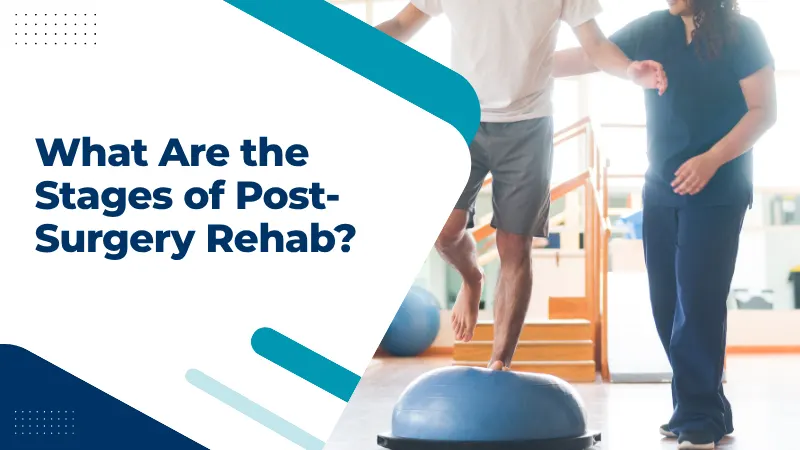
Post-surgery rehabilitation typically progresses through four main stages, moving from immediate protection of the surgical site through to a full return to normal function. Early movement and progressive strengthening sit between those two points, and each stage prepares the body for the one that follows. Recovery timelines vary considerably. A minor procedure may clear all four stages within six weeks, while a joint replacement or spinal surgery can take several months. What determines readiness is whether each stage has genuinely been completed, not simply waited out.
According to the physiotherapy team at Back to Ease in Bayswater, “Patients often want to jump straight to strengthening. But early movement done properly protects the surgical site, and skipping it usually costs more time later than it saves.”
What Happens in Each Stage of Post-Surgery Rehab?
Recovery breaks down into four workable phases, not one long blur of healing.
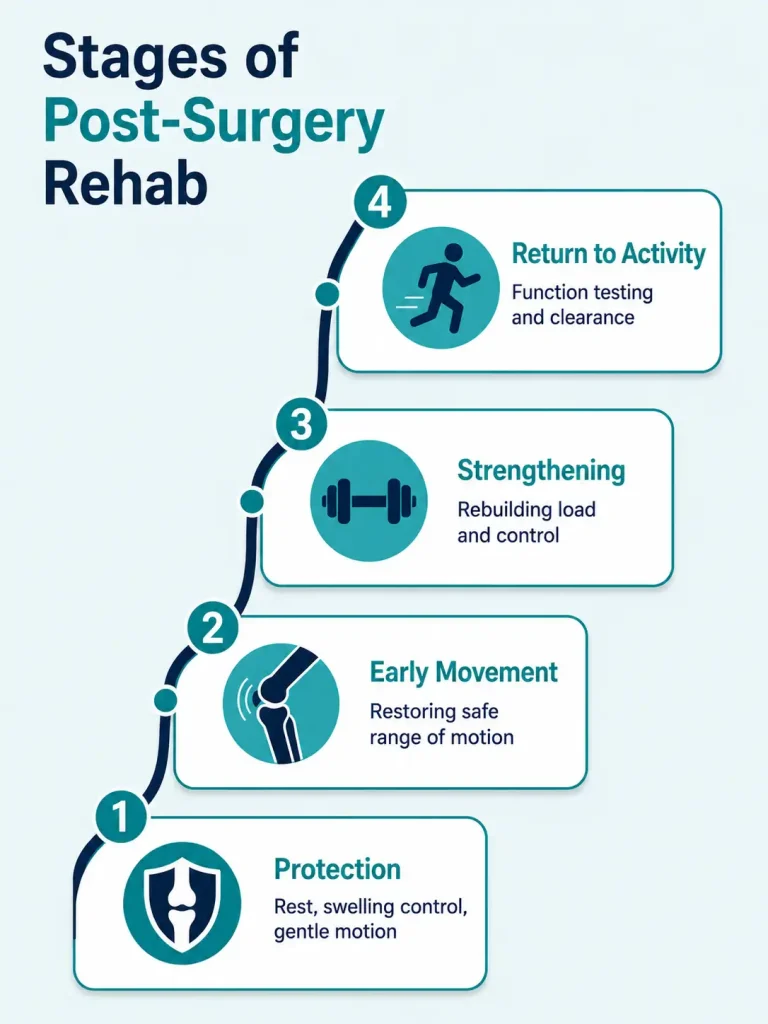
Timelines here aren’t fixed by the calendar so much as by what the tissue’s actually doing. A knee replacement and a spinal fusion don’t follow identical scripts, and a physio will usually adjust the pace of each stage based on swelling, pain response and how movement is progressing week to week. Because two people with the same surgery can heal at genuinely different speeds, recovery rarely looks identical. The stages overlap more than they replace each other. Strength work often starts in a small, controlled way well before the “movement” phase is technically finished. That’s normal, not a sign anything’s off.
Getting individualised guidance through this process, including post-surgical rehab support, tends to shorten the rougher patches considerably.
Why Does the Order of These Stages Matter?
Skipping ahead feels productive. It rarely is.
- Rushing strength work: Load a joint too soon and re-injury risk climbs fast, undoing healing that’s barely underway.
- Under-loading too long: Playing it safe past the early phase has its own cost. Stiffness. Weakness. A joint that never quite feels dependable again.
- Missing check-ins: Skip regular reassessment and small plateaus turn into real setbacks nobody saw coming.
- Ignoring pain signals: Sharp or ongoing pain is usually the body’s way of saying the tissue needs more time. Pushing past it doesn’t speed things up. It just adds another delay to fix later.
So the order matters more than the pace. Curious when it’s actually safe to push harder? This training return timeline explains a similar staged approach for returning to training after a sports injury.
Why choose Back to Ease Physiotherapy?
Back to Ease is a physiotherapy clinic in Bayswater with real experience across joint replacements, ligament reconstructions, and spinal procedures. The plan at each stage is built around what the tissue is actually doing, not a fixed script that ignores how the individual is responding.
Getting strength back after surgery takes structured loading and honest reassessment along the way. Most patients work through the stages steadily and return to daily life and activity with genuine confidence, not just a discharge date.
Frequently Asked Questions
How long does rehab after surgery usually take?
Usually six weeks to several months. Depends on the surgery.
Can rehab start before I feel fully healed?
Yes. Early, guided movement often begins within days of surgery.
What if I skip a stage of rehab?
Re-injury risk goes up, and full recovery tends to take longer.
Do all surgeries go through the same rehab stages?
Broadly, yes. Pacing and specific milestones vary by procedure though.
Disclaimer :
This blog is for educational purposes only and is not a substitute for professional advice. Please consult a certified physiotherapist for diagnosis and treatment specific to your condition.
Book a Consultation
It’s easy and free!