

A winged scapula is one of those shoulder issues that often gets noticed by someone else before the person experiencing it even feels anything unusual - a friend spotting a shoulder blade jutting out, or a coach noticing it during training. Our team providing physiotherapy in Bayswater regularly works with clients who come in after …

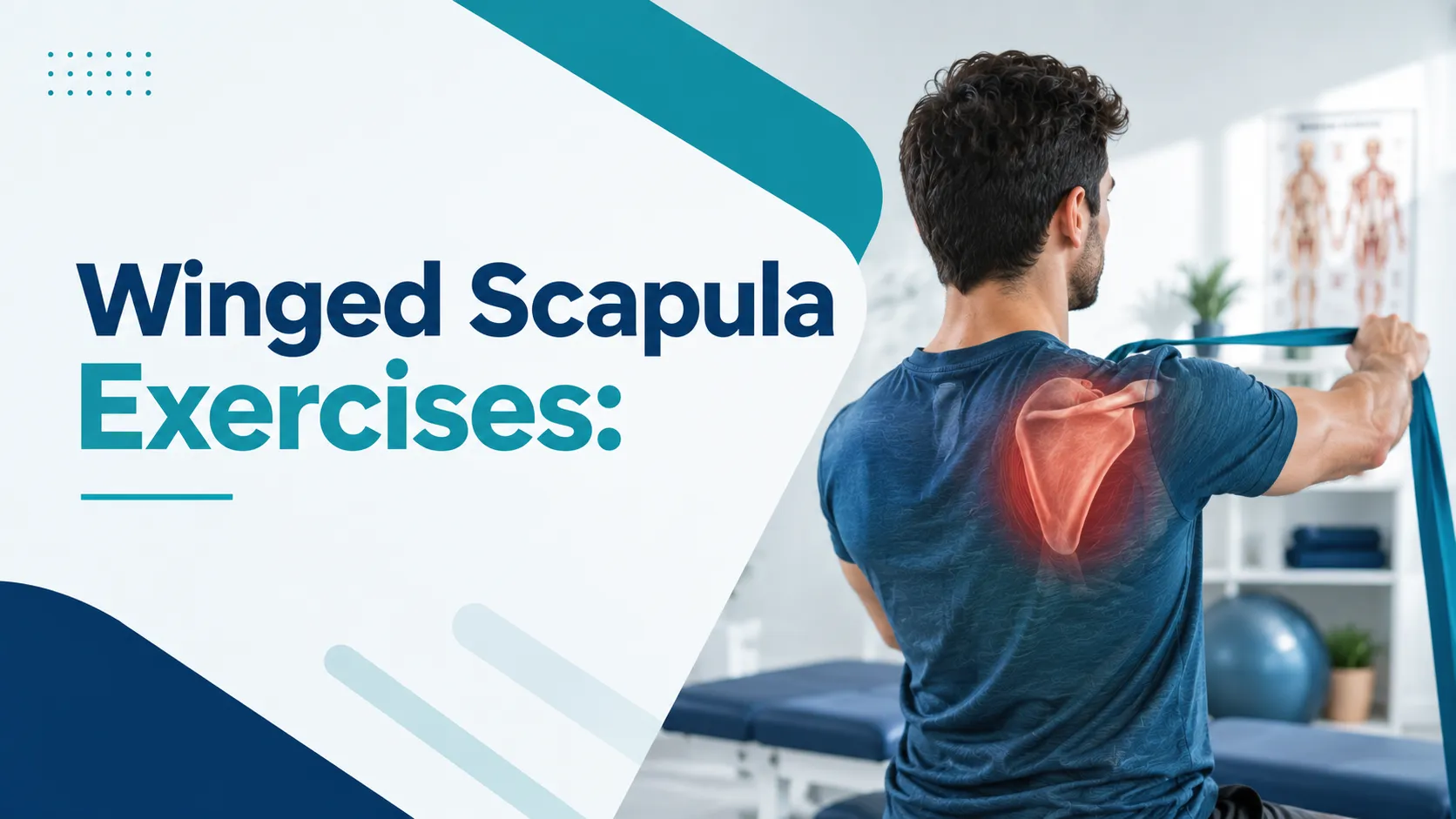
A winged scapula is one of those shoulder issues that often gets noticed by someone else before the person experiencing it even feels anything unusual – a friend spotting a shoulder blade jutting out, or a coach noticing it during training. Our team providing physiotherapy in Bayswater regularly works with clients who come in after noticing this change in their shoulder shape, unsure whether it’s serious or simply a posture quirk.Our physiotherapist, often explains that winged scapula exercises are only part of the picture – understanding why the winging is happening matters just as much as the exercises themselves.
Still feeling that shoulder blade catch mid-workout no matter how many band rows you add? A quick assessment with our team can usually pinpoint what the exercises alone are missing.
What Is a Winged Scapula?
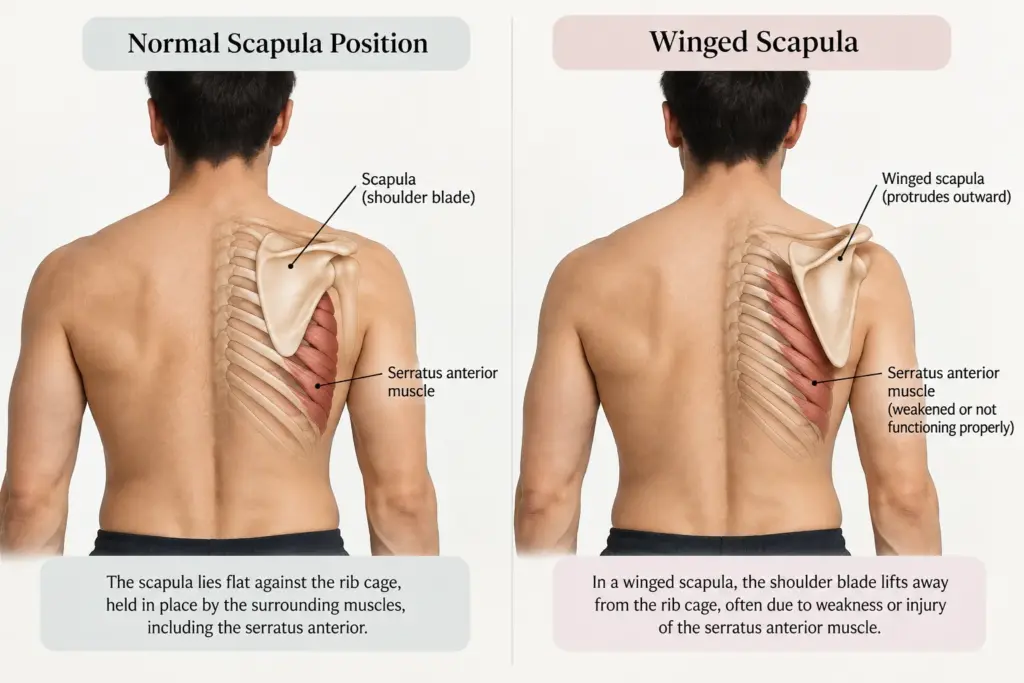
A winged scapula happens when the shoulder blade doesn’t sit flat against the rib cage the way it should, and instead the inner or lower border lifts away from the back – most visible when someone pushes against a wall or raises their arm forward. It’s usually a sign that the muscles responsible for holding the shoulder blade in place, particularly the serratus anterior, aren’t firing the way they need to.
What Causes a Winged Scapula?
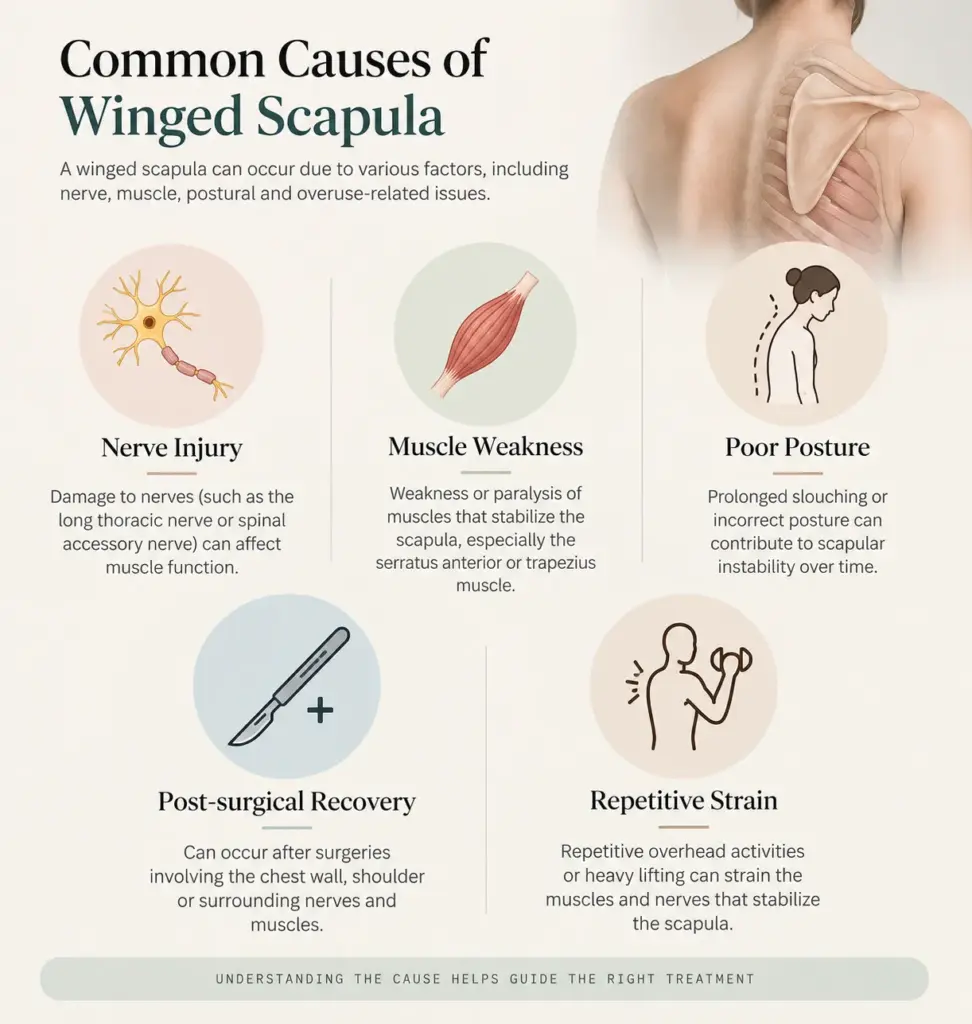
There isn’t a single cause – it can stem from nerve involvement (often the long thoracic nerve), muscle weakness following an injury, repetitive overhead strain from sport or manual work, or poor posture habits built up over years at a desk. Some people also notice it develop after a shoulder or chest surgery, where the surrounding muscles haven’t been reactivated properly during recovery.
Why choose Back to Ease Physiotherapy?
Back to Ease is a physiotherapy clinic in Bayswater with experience treating shoulder pain, myofascial restriction, and trigger point presentations across a range of patients. Shoulder cases here don’t get a generic routine. The assessment determines which muscles are driving the pain, which are compensating, and in what order they need to be addressed.
Targeting the right muscle at the right stage, paired with the right exercise, is what produces lasting change rather than temporary relief. Most patients notice a real difference within a few sessions once the source of the pain, not just the symptoms, is being treated.
Because the underlying cause varies so much from person to person, our physiotherapy in Bayswater team typically starts with a movement assessment rather than handing over a generic exercise sheet.
Signs You Might Be Dealing With a Winged Scapula
The most obvious sign is visible – the shoulder blade sticking out, especially during a wall push-up or when reaching forward. Alongside that, people often mention a dull ache around the shoulder blade, a feeling of weakness when lifting the arm overhead, or difficulty carrying heavier bags on one side without discomfort.
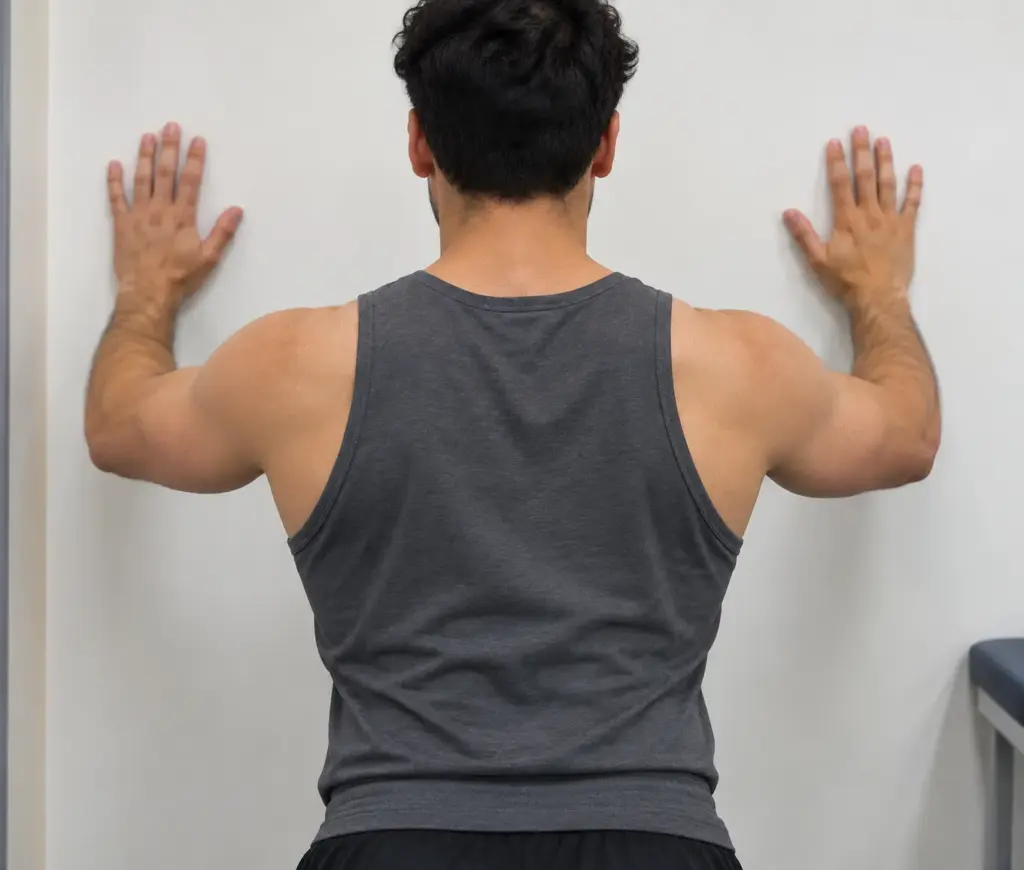
If the winging showed up after a shoulder injury or surgery and hasn’t settled in a few weeks, that’s worth a proper look rather than more guesswork – our clinic can help map out what’s actually going on.
When Professional Guidance Makes a Difference
Self-directed exercises can help mild cases, but when winging is linked to nerve involvement or a deeper strength imbalance, doing the wrong exercise – or doing the right one incorrectly – can slow recovery down. This is where an assessment from our physiotherapy in Bayswater clinic tends to be recommended, particularly if the winging has appeared after an injury or surgery, or hasn’t improved after a few weeks of basic exercises.
For related shoulder and soft tissue concerns, our soft tissue release in Bayswater service is sometimes used alongside strengthening work to ease surrounding muscle tightness that can mask or worsen the winging pattern.
“A winged scapula is rarely about one weak muscle – it’s usually the whole shoulder blade losing its rhythm with the rest of the shoulder. Getting that rhythm back takes the right sequence of exercises, not just more exercises.” – Saurabh Patel (Sam),physiotherapist at Back to Ease Physiotherapy
Preventing a Winged Scapula From Coming Back
Once strength is restored, the focus usually shifts to posture and movement habits – adjusting desk setup, building in regular shoulder blade activation during long sitting periods, and gradually returning to overhead sport or lifting rather than jumping back in at full intensity.

Noticed the shoulder blade popping out again after a busy week back at the desk? That’s usually a sign the surrounding muscles need a bit more attention, not a full restart.
Frequently Asked Questions
What does a winged scapula feel like?
Many people don’t feel pain at first – it’s often noticed visually, with some describing a dull ache or weakness when lifting the arm.
Can winged scapula exercises fix it on their own?
Mild cases linked to muscle weakness often improve with consistent, correctly-sequenced exercises, while nerve-related cases usually need professional guidance.
How long does it take to correct a winged scapula?
Recovery timelines vary widely depending on the cause, ranging from a few weeks for mild muscular cases to several months for nerve-related winging.
Is a winged scapula the same as a shoulder impingement?
No – they’re different conditions, though a winged scapula can contribute to shoulder impingement symptoms over time if left unaddressed.
References :
- Physiopedia – Scapular Winging
- Journal of Orthopaedic & Sports Physical Therapy – long thoracic nerve palsy research
- American Academy of Orthopaedic Surgeons – shoulder blade conditions overview
Disclaimer :
The information shared in this content is for educational purposes only and not for promotional use.
Book a Consultation
It’s easy and free!