

The vast majority of sciatica cases don't need an operating table. Targeted conservative care, particularly physiotherapy for sciatica, works by reducing nerve irritation, unloading the compressed area of the spine, and bringing back normal movement, typically within four to twelve weeks. Surgery becomes a conversation only when conservative options have genuinely been exhausted. And for …


The vast majority of sciatica cases don’t need an operating table. Targeted conservative care, particularly physiotherapy for sciatica, works by reducing nerve irritation, unloading the compressed area of the spine, and bringing back normal movement, typically within four to twelve weeks. Surgery becomes a conversation only when conservative options have genuinely been exhausted. And for most people, they haven’t been.
According to the physiotherapy team at Back to Ease in Bayswater, “Sciatica responds well to the right physio approach. The nerve needs to be unloaded and moved through range, not rested into stiffness. Most people avoid surgery entirely when they get that balance right from the start.”
How Does Physiotherapy for Sciatica Actually Work?
Physiotherapy for sciatica nerve pain doesn’t just chase the symptom down the leg. It traces back to the source.
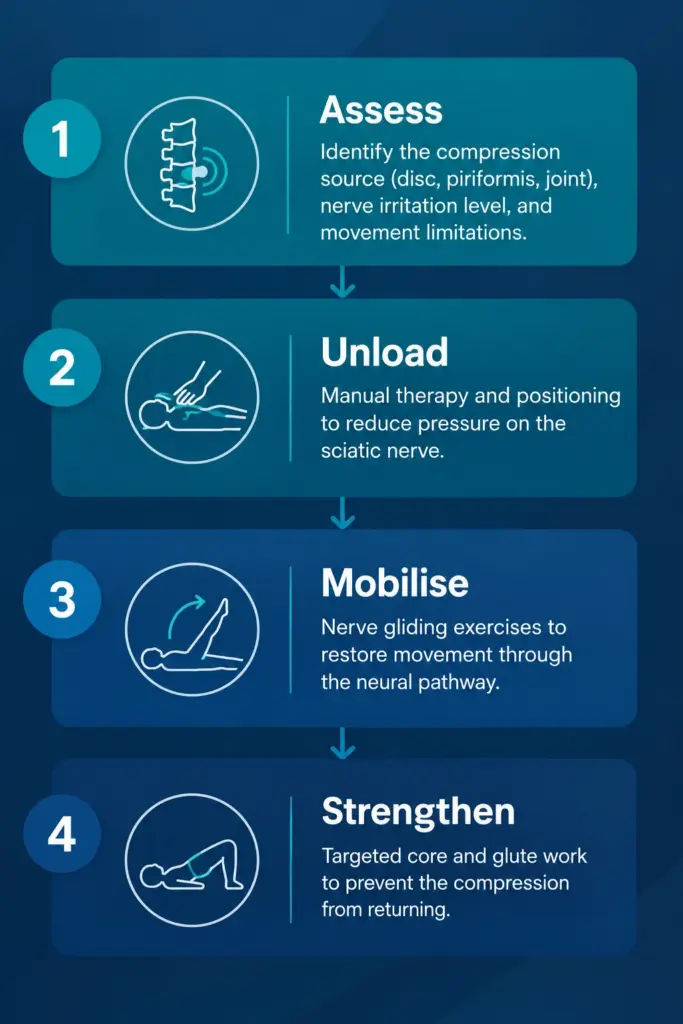
Most people are surprised how quickly symptoms ease once the nerve actually starts moving again. Nerve mobilisation, combined with hands-on manual therapy and postural correction, addresses the mechanical reason the sciatic nerve is compressed rather than masking it. The strengthening phase that follows is what stops it coming back. For a proper assessment and tailored plan, our sciatica treatment approach starts with identifying exactly where and why the nerve is being irritated.
What Causes Sciatica and Does It Change Treatment?
The cause matters. Treating a piriformis compression the same way as a disc herniation rarely works. Back to Ease assesses the source first.
- Lumbar disc herniation: The most common cause. A disc bulges and presses directly onto the sciatic nerve root. Nerve mobilisation and spinal decompression techniques are the primary focus here.
- Piriformis syndrome: The sciatic nerve runs under or through the piriformis muscle in the hip. Tightness there compresses the nerve without any disc involvement at all. Soft tissue release and targeted hip stretching drive this treatment.
- Spinal stenosis: Narrowing of the spinal canal puts ongoing pressure on nerve roots. Flexion-based exercises and postural work typically reduce symptoms here.
- Degenerative disc changes: Worn discs reduce the space where nerve roots exit the spine. Strengthening the surrounding musculature takes over the load-bearing role the disc can no longer fully manage.
Because the root cause shapes everything, getting the diagnosis right at the start saves weeks of misdirected treatment. Our guide on lower back pain physio covers how the same principle applies to broader lumbar conditions.
Why Choose Back to Ease?
Back to Ease is a physiotherapy clinic in Bayswater with experience treating sciatica and lumbar spine conditions across both the Bayswater and Doveton locations. Every sciatica case gets assessed properly before treatment starts, because the cause, whether it’s a disc, a tight piriformis, or a stenotic joint, changes the entire treatment approach. No generic protocols. The plan is built around what’s actually compressing the nerve.
Most patients notice a real reduction in leg pain within the first few sessions. Getting the source right early is what makes that possible, and it’s what keeps most people out of the surgical conversation altogether.
Frequently Asked Questions
Can physiotherapy really treat sciatica without surgery?
Yes. Most sciatica cases resolve with targeted physio within four to twelve weeks.
What does sciatica feel like?
Nerve pain, tingling or weakness running from the lower back into the leg.
When is sciatica a medical emergency?
If pain is severe, worsening, or affecting bladder or bowel function.
What movements are safe with sciatica?
Walking, gentle stretching and core work are generally safe starting points.
Disclaimer :
This blog is for educational purposes only and is not a substitute for professional advice. Please consult a certified physiotherapist for diagnosis and treatment specific to your condition.
Book a Consultation
It’s easy and free!