
Physio won't reverse what arthritis has already done to a joint. But that's not really the question. The question is whether it reduces pain, keeps things moving, and builds enough strength around the joint that daily life gets easier. And on all three counts, yes, it's worth it. Physiotherapy for arthritis is consistently recommended as …


Physio won’t reverse what arthritis has already done to a joint. But that’s not really the question. The question is whether it reduces pain, keeps things moving, and builds enough strength around the joint that daily life gets easier. And on all three counts, yes, it’s worth it. Physiotherapy for arthritis is consistently recommended as a first-line approach, not a last resort after everything else fails. Most people who come in have been managing on their own for longer than they should’ve. The pain was manageable until it wasn’t.
Medication helps. But it doesn’t rebuild the muscle that takes load off the joint.
According to the physiotherapy team at Back to Ease in Bayswater, “Arthritis changes the joint, but it doesn’t have to change what you can do. A lot of the pain people attribute to arthritis itself is actually coming from the surrounding muscle guarding and altered movement. That’s very manageable with the right approach.”
What Does Physiotherapy for Arthritis Actually Involve?
It’s more targeted than most people expect. Not heat packs and a stretch sheet.
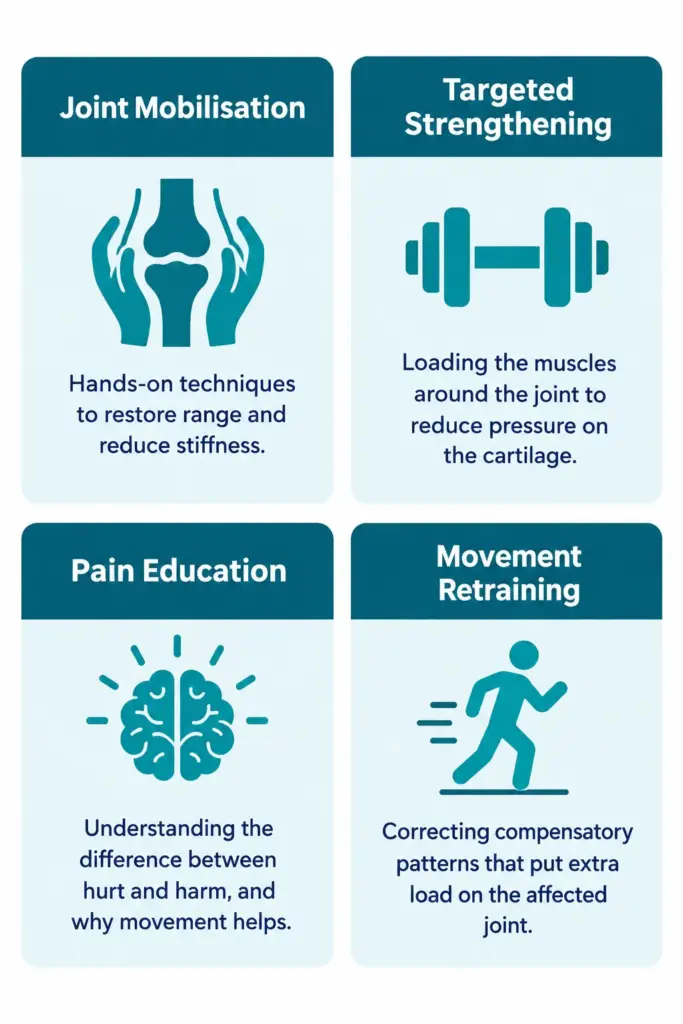
Here’s what most people don’t realise. The pain in an arthritic joint isn’t coming entirely from the cartilage. A lot of it is muscle guarding, altered gait, and joints being loaded wrong because surrounding tissue is weak or tight. That’s where physio does its real work. A 2024 systematic review across 23 randomised controlled trials found physiotherapy modalities reduced pain consistently in hip and knee osteoarthritis. But the reason it works long term is the strengthening component. Stronger muscles around the joint mean less compressive force on the cartilage with every step. So it’s not passive. Arthritis physiotherapy asks you to do things, which is exactly why it holds up after the sessions end.
Your physio maps out what’s actually happening before deciding how to treat it. That’s what makes a proper arthritis treatment plan different from a general exercise class.
What Types of Arthritis Respond to Physiotherapy?
The short answer is most of them. But how physio is applied varies quite a bit depending on the type.
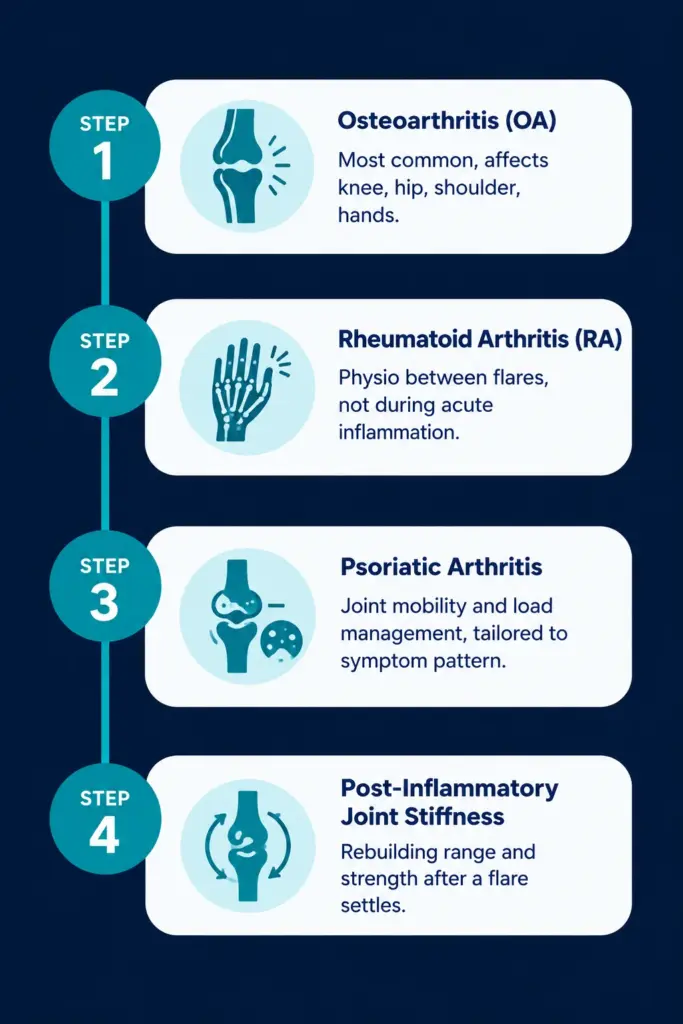
- Osteoarthritis: Cartilage doesn’t grow back, so the goal shifts to protecting what’s there. Stronger quads, for example, reduce the load going through a knee with every step by a clinically significant amount. Exercise therapy has the strongest non-surgical evidence base of any OA treatment. Stronger than anti-inflammatories for long-term function.
- Rheumatoid arthritis: Physio runs alongside medical management here, not instead of it. Between flares, structured exercise keeps joint range from dropping, maintains grip strength, and slows the functional decline that tends to creep in with long-term RA. During a flare, the plan adjusts.
- Psoriatic arthritis: Joint involvement is unpredictable with this type. Which joints, how severely, and when, all varies. A physio builds the program around what’s actually showing up rather than following a generic arthritis protocol.
- Post-inflammatory stiffness: Once a flare settles, the joint is often stiff and underloaded. That window is where good physio earns its keep. Get the range back, rebuild strength gradually, and the joint handles the next flare better than it would have otherwise.
For a practical look at how staged recovery works across joint conditions, the joint pain recovery blog covers the approach in detail.
Why Choose Back to Ease?
Back to Ease is a physiotherapy clinic in Bayswater with experience treating chronic musculoskeletal conditions including osteoarthritis, rheumatoid arthritis, and post-inflammatory joint pain. Each case gets assessed properly first, looking at which joints are involved, how movement is being compensated elsewhere, and what the person actually needs to stay active day to day.
Most patients see a real difference in both pain and function with a consistent, well-paced program. Getting the joint moving better is part of it. Building the muscle to keep it that way is what the rest of the plan is for.
Frequently Asked Questions
Can physiotherapy cure arthritis?
Not a cure, but it can reduce pain and genuinely improve movement for most people.
How often should I see a physio for arthritis?
It depends on your symptoms and progress. Weekly sessions are common when starting.
Is exercise safe when my arthritis is flaring?
Light movement usually is. Heavy loading isn’t. Your physio decides.
Does physio for arthritis keep working long term?
It tends to, especially if you stick with the home exercises too.
Disclaimer :
This blog is for educational purposes only and is not a substitute for professional advice. Please consult a certified physiotherapist for diagnosis and treatment specific to your condition.
Book a Consultation
It’s easy and free!