

A sprain affects a ligament, the connective tissue that holds bones together at a joint. A strain affects a muscle or tendon, where muscle meets bone. Both involve overstretching or tearing of soft tissue, but because the structures are different, so is the way each one heals and responds to treatment. Sprains are graded by …

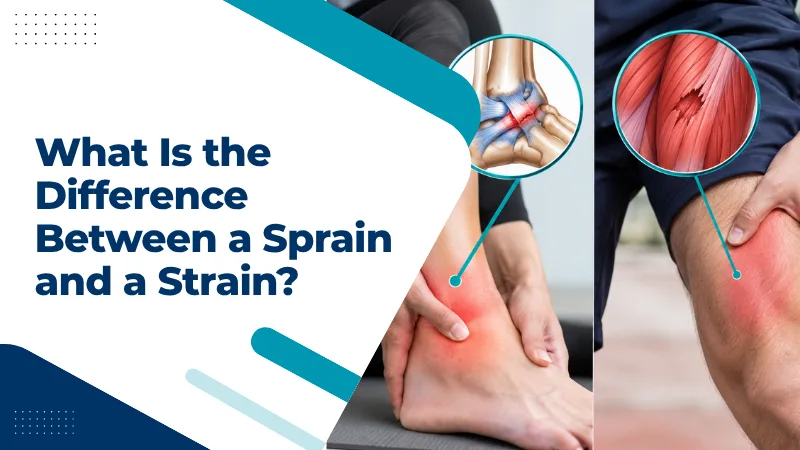
A sprain affects a ligament, the connective tissue that holds bones together at a joint. A strain affects a muscle or tendon, where muscle meets bone. Both involve overstretching or tearing of soft tissue, but because the structures are different, so is the way each one heals and responds to treatment. Sprains are graded by how much the ligament is disrupted. Strains are graded by how much muscle fibre is involved. Getting that distinction right from the start determines whether the rehab actually matches what the tissue needs.
Most presentations look similar in the first 48 hours, which is exactly why an early assessment makes a difference.
According to the physiotherapy team at Back to Ease in Bayswater, “People assume sprains are always worse than strains, or the other way around. That’s not how it works. A Grade 3 muscle tear is far more serious than a Grade 1 ligament stretch. The grade and the structure together tell you what you’re dealing with.”
How Are Sprains and Strains Different in Practice?
The tissue is different. So is the symptom pattern, the location, and what the body does to fix it.
Feature | Sprain | Strain |
Structure affected | Ligament – connects bone to bone | Muscle or tendon – connects muscle to bone |
Location | Around a joint (ankle, knee, wrist) | Muscle belly or tendon attachment |
Common cause | Sudden twisting or rolling | Overload, sudden contraction, or fatigue |
Key symptoms | Joint instability, bruising, swelling | Sharp pulling pain, tightness, muscle weakness |
Grade 1 | Ligament stretched | Muscle/tendon overstretched |
Grade 2 | Partial ligament tear | Partial muscle/tendon tear |
Grade 3 | Complete ligament tear | Complete muscle/tendon rupture |
Simple way to remember | Sprain = ligament injury | Strain = muscle/tendon injury |
Ligaments don’t have great blood supply, which is part of why sprain recovery is slower and less predictable than people expect. A Grade 1 ankle sprain might feel fine after ten days. The ligament isn’t fully healed. Grade 2 and 3 sprains often involve enough structural disruption that the joint loses its sense of position, proprioception, and that’s what leads to repeat injuries if rehab doesn’t address it. Muscle strains, on the other hand, tend to heal faster because muscle tissue is well-vascularised. But a Grade 3 muscle tear, a full rupture, is a different story. Because the two injuries look so alike early on, the location of pain and how the injury happened are what a physio uses to work out which one it is, usually before imaging even comes into it.
A proper diagnosis early is what makes sports physiotherapy worth starting sooner rather than sitting on it.
How Does Physio Approach a Sprain vs a Strain?
The early phase has some overlap. Past that, the structure that’s injured shapes the whole approach.
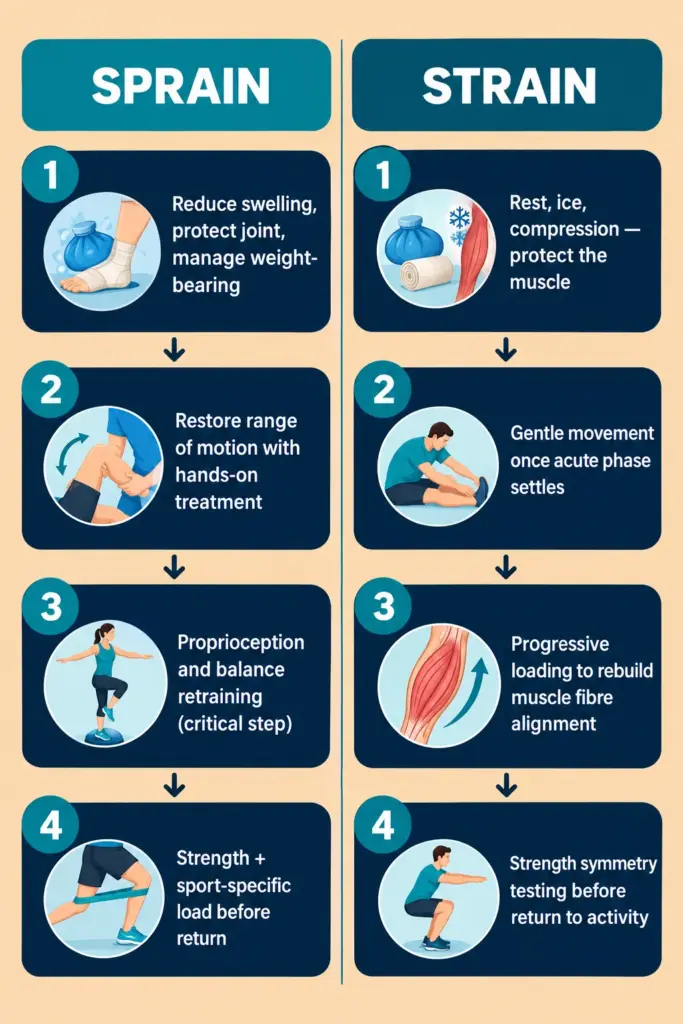
- Sprains: stability before strength. Proprioception rehab is what separates a properly rehabbed sprain from one that rolls again six weeks later. Taping and bracing play a bigger role here than with most strains.
- Strains: load early, load right. Too much rest causes scar tissue to form without alignment. Graduated loading from the right point is what gives the muscle its tensile strength back.
- Grade decides urgency. Grade 1 of either type usually responds to first aid and a home program. Grade 2 or 3 needs proper assessment and a structured plan.
- Return criteria differ. Sprains need joint stability and balance tests. Strains need strength symmetry. Neither is cleared by pain going away on its own.
Both follow a staged recovery process, and the ankle sprain recovery blog walks through what that staged approach actually looks like from day one.
Why Choose Back to Ease?
Back to Ease is a physiotherapy clinic in Bayswater with experience treating soft tissue injuries across all grades, from weekend sport incidents to workplace and motor vehicle injuries. Every presentation gets graded properly on assessment before a plan is built, because treating a Grade 2 ligament sprain the same way as a Grade 1 muscle strain is how people end up back in the clinic months later.
Patients tend to recover faster when the injury is identified accurately early and the rehab matches the grade of tissue injury, rather than following a standard timeline. Both sprain and strain rehab are about rebuilding the tissue properly, not just waiting for the pain to go away.
Frequently Asked Questions
Is it okay to walk on a sprain?
Depends on the grade. A mild one, usually yes. A bad one, get it checked.
How do you know if it's a sprain or a strain?
Location is the clue. Joint area usually means sprain. Muscle belly means strain.
Do sprains and strains need physio?
Grade 2 and above usually do. Grade 1 often settles with basic first aid.
How long does healing take for a sprain or strain?
Mild ones, one to two weeks. Severe tears can take two to three months.
Disclaimer :
This blog is for educational purposes only and is not a substitute for professional advice. Please consult a certified physiotherapist for diagnosis and treatment specific to your condition.
Book a Consultation
It’s easy and free!