
A bulging disc doesn't always announce itself loudly. Some people carry one for years without a single symptom. Others feel a sharp, localised ache in the back that spikes the moment they sit down, cough or sneeze. When the disc presses on a nearby spinal nerve, the pain stops being local, it starts radiating into …


A bulging disc doesn’t always announce itself loudly. Some people carry one for years without a single symptom. Others feel a sharp, localised ache in the back that spikes the moment they sit down, cough or sneeze. When the disc presses on a nearby spinal nerve, the pain stops being local, it starts radiating into the leg or arm as numbness, tingling or a burning discomfort that feels nothing like ordinary back pain. That combination of bulging disc symptoms is what separates a disc problem from a simple muscle strain.
According to the physiotherapy team at Back to Ease in Bayswater, “The symptoms can look very different from person to person. Some come in with leg pain and no back pain at all. Getting the assessment right first is what stops weeks of the wrong treatment.”
What Does a Bulging Disc Actually Look Like and Feel Like?
The disc sits between spinal vertebrae and acts as a shock absorber. When the outer wall weakens, the disc protrudes, pressing into the surrounding space. Whether you feel it depends entirely on what it presses against.
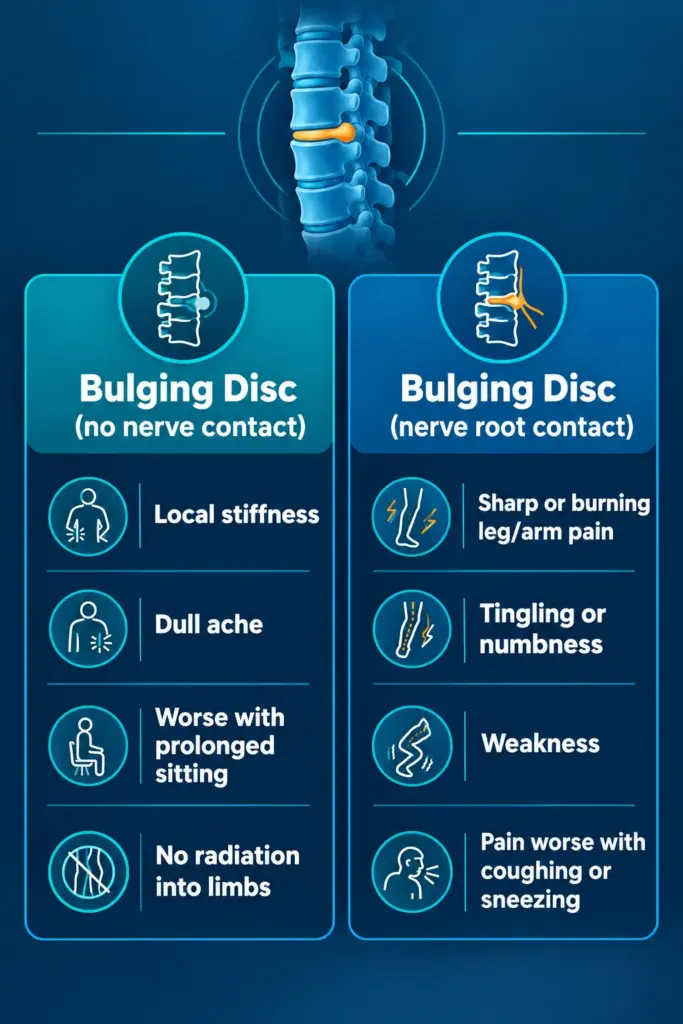
A disc protrusion without nerve contact often feels like stubborn, positional back pain that eases when you move. Once spinal nerve compression is involved, the picture changes: burning or shooting pain down one limb, patches of numbness, or a weakness that makes certain movements unreliable. Herniated disc symptoms overlap heavily with this, since the difference between a bulge and a herniation is mostly degree. In both cases the nerve root is what drives the referred leg or arm pain, not the disc itself. Our disc bulge treatment approach starts by identifying precisely which nerve level is involved before planning any intervention.
What Causes a Disc Bulge and Can It Heal Naturally?
Most disc bulges aren’t the result of one dramatic event. They build gradually. And they can genuinely improve with the right conservative approach.
- Age-related disc degeneration: Discs lose hydration over time, which makes the outer wall more vulnerable to bulging under everyday load. This is the most common underlying factor.
- Prolonged sitting and poor posture: Hours of flexed lumbar spine loading increases posterior disc pressure consistently. The disc eventually responds. Most desk workers with disc bulges have this pattern behind them.
- Heavy or repetitive lifting: Sustained or sudden compressive forces through a poorly positioned spine push disc material outward. Technique and load management matter here.
- Muscle weakness around the spine: Without adequate core and glute support, the disc absorbs forces it shouldn’t have to. Strengthening this system is a core part of natural recovery and long-term prevention.
Because this condition responds well to conservative physiotherapy: load correction, nerve mobilisation and progressive strengthening; surgery is rarely needed. The sciatica that often follows a lumbar disc bulge follows the same conservative pathway. “Our guide on lower back pain physio covers how the same conservative approach applies across lumbar conditions.”
Why Choose Back to Ease?
Back to Ease is a physiotherapy clinic in Bayswater with experience assessing and treating lumbar and cervical disc conditions across both the Bayswater and Doveton locations. Every disc case gets assessed properly before treatment starts, because identifying the exact disc level and nerve involvement is what determines whether the plan will actually work. No generic back programs. The approach is built around what that specific disc is doing and what the surrounding musculature needs to take over the load.
Most patients notice a real reduction in leg or back symptoms within the first few sessions of targeted conservative care. Getting the assessment right early is what keeps most people out of the surgical pathway altogether.
Frequently Asked Questions
Is a bulging disc fully curable?
Most cases improve significantly with consistent physio and lifestyle changes.
What is the fastest way to heal a bulging disc?
Targeted physio, nerve mobilisation and load management started early.
Can I live a normal life with a bulging disc?
Yes. Many people manage well with the right physio plan and movement habits.
What is the main cause of a disc bulge?
Age-related wear, poor posture, heavy lifting or prolonged sitting under load.
Disclaimer :
This blog is for educational purposes only and is not a substitute for professional advice. Please consult a certified physiotherapist for diagnosis and treatment specific to your condition.
Book a Consultation
It’s easy and free!